
SPECIALIZED PHYSIOTHERAPY
TMJ & Orofacial Pain Physiotherapy in Edmonton
Restore jaw function. Manage pain. Move with confidence.
Specialized, evidence-informed physiotherapy for temporomandibular disorders, jaw pain, restricted jaw movement, and associated musculoskeletal symptoms.
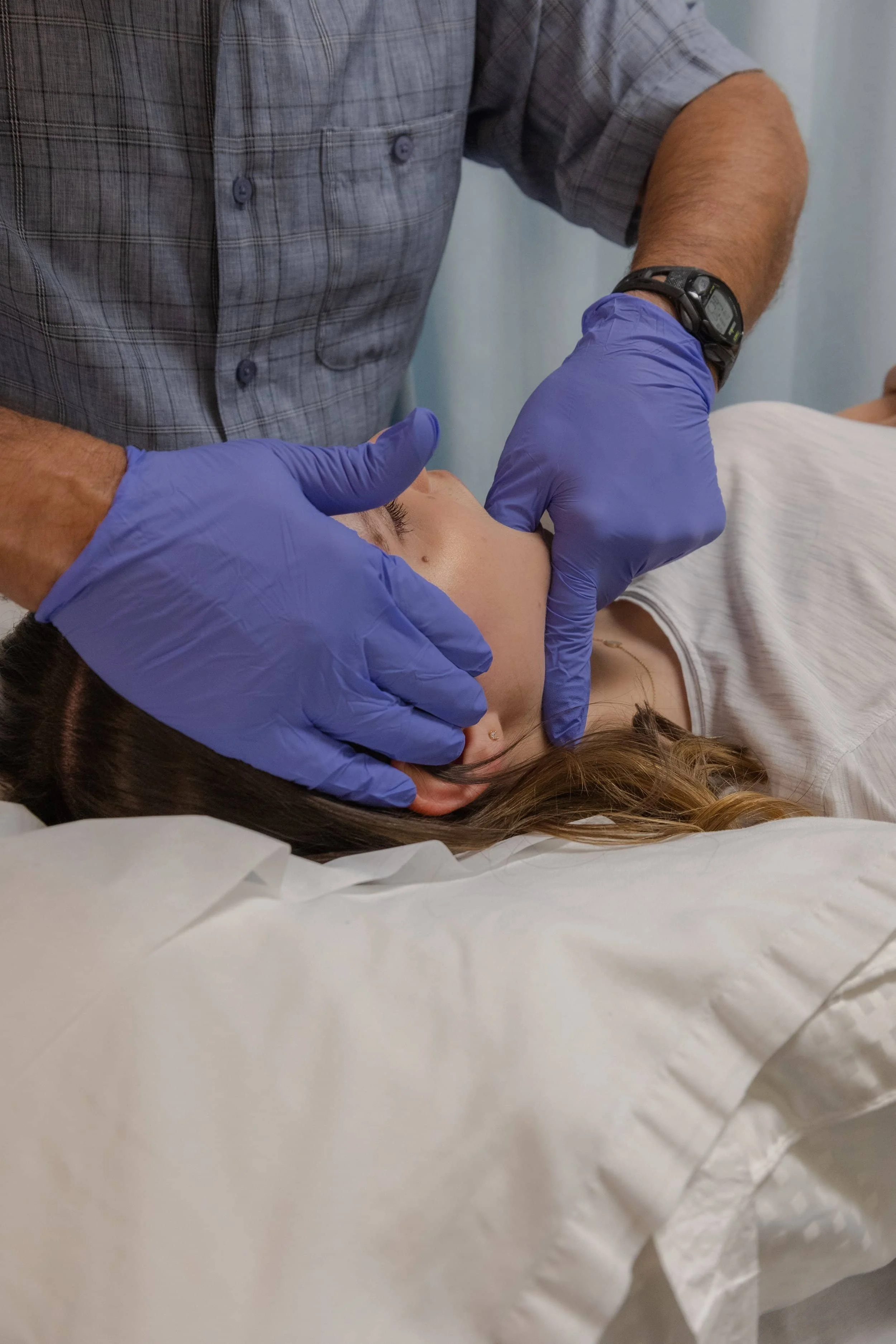
Bonnie Doon Medical Centre, Edmonton

Comprehensive TMJ Assessment

Individualized Rehabilitation

Collaborative Care

Understanding TMJ, TMD & Orofacial Pain
The temporomandibular joints (TMJs) connect the lower jaw to the skull, allowing movements essential for chewing, speaking, swallowing, and yawning. These joints work together with the surrounding muscles, ligaments, and nervous system to coordinate jaw movement and function.
Temporomandibular disorders (TMD) describe a group of conditions affecting the jaw joints, chewing muscles, and associated structures. Symptoms may include jaw pain, clicking or popping, restricted mouth opening, jaw locking, facial pain, and headaches.
Orofacial pain is a broader term describing pain affecting the face, mouth, and jaw. While TMD is a common cause of orofacial pain, symptoms may also arise from dental, neurological, or other medical conditions.
TMD is often multifactorial. Joint and muscle function, previous injuries, jaw habits, sleep, psychological stress, and pain sensitivity may all influence symptoms.
TMJ physiotherapy focuses on assessing and managing the musculoskeletal and movement-related components of these conditions, with referral to dental or medical professionals when indicated.
TMJ Conditions & Symptoms We Treat
Temporomandibular disorders can involve the jaw joints, chewing muscles, and surrounding structures. Symptoms may develop gradually, following an injury, or in association with other pain conditions.
Our physiotherapists assess and manage a range of musculoskeletal conditions affecting jaw movement, function, and comfort.
Muscle-Related TMD
Masticatory muscle pain (myalgia)
Myofascial pain
Jaw muscle tension and fatigue
Muscle-related facial pain
Pain associated with clenching or grinding

Headaches & Orofacial Pain
Headaches attributed to TMD
Masticatory muscle-related referred pain
Pain around the temples and cheeks
Persistent musculoskeletal facial pain
Referred pain around the ear

Joint-Related TMD
TMJ arthralgia (joint pain)
Articular disc displacement
Degenerative joint disorders
Symptomatic joint clicking and popping
TMJ hypermobility and instability

Jaw & Cervical Spine Conditions
Coexisting jaw and neck pain
Cervical movement restrictions
Cervical muscle-related pain
Jaw symptoms following whiplash
Altered jaw and cervical motor control

Jaw Locking & Restricted Movement
Disc displacement without reduction (closed lock)
Intermittent jaw locking
Restricted mouth opening
Altered jaw movement patterns
Difficulty chewing or yawning

Post-Traumatic & Post-Surgical Rehabilitation
Jaw dysfunction following motor vehicle accidents
Jaw injuries associated with sports or trauma
Rehabilitation following TMJ surgery
Rehabilitation following orthognathic surgery
Post-operative jaw stiffness and functional limitations

Common Symptoms of Temporomandibular Disorders
Pain when chewing or opening the mouth
Jaw clicking, popping or grinding sounds
Difficulty opening the mouth fully
Intermittent or persistent jaw locking
Jaw muscle fatigue or tenderness
Pain around the temples, cheeks or ears
Headaches associated with jaw function
Jaw stiffness upon waking

Important clinical note
Painless jaw clicking or popping is relatively common and does not necessarily require treatment. Similarly, not all facial pain, headaches, or ear-related symptoms originate from the temporomandibular joint.
A comprehensive assessment helps determine whether physiotherapy is appropriate or whether further dental, oral medicine, or medical evaluation is indicated.
Understanding the Factors Behind Jaw Pain
Temporomandibular disorders (TMD) are complex conditions that can develop through an interaction of biological, physical, psychological, and social factors. In many cases, there is no single identifiable cause.
Jaw pain may be influenced by changes in joint or muscle function, previous injuries, repetitive jaw activities, sleep quality, stress, general health, and the way the nervous system processes pain.
Structural changes within the temporomandibular joint do not always correspond to the severity of symptoms. Some individuals experience joint clicking or disc displacement without pain, while others experience significant discomfort without substantial structural abnormalities.
Understanding the factors relevant to each individual is an important part of TMJ physiotherapy assessment and rehabilitation.
Joint & Muscle Function
Jaw joint inflammation, degenerative changes, disc displacement, and pain within the chewing muscles may contribute to discomfort and movement limitations. However, structural changes alone do not necessarily explain symptoms.
Sleep & Recovery
Sleep disturbances and poor sleep quality are associated with painful TMD. Sleep and pain can influence one another, potentially affecting symptom sensitivity, fatigue, and overall well-being.

Jaw Habits & Physical Loading
Frequent teeth clenching, sustained jaw muscle activity, prolonged mouth opening, and repetitive chewing may increase physical demands on the jaw and aggravate symptoms in some individuals.

Nervous System & Pain Sensitivity
Changes in how the nervous system processes pain may contribute to persistent jaw and facial pain in some individuals. Pain intensity does not always directly reflect the extent of tissue injury or structural changes.

Cervical Spine & Associated Symptoms
Neck pain, headaches, and cervical movement limitations can coexist with TMD. The relationship between the jaw and cervical region may be relevant to assessment and rehabilitation, although neck dysfunction is not necessarily the cause of jaw pain.
Psychological Factors & General Health
Emotional distress, anxiety, stress, previous injuries, and other health conditions may influence the development or persistence of TMD symptoms. These factors can interact with physical processes without making the pain any less real.

Jaw Pain Is Not Always a Structural Problem
Jaw clicking, variations in bite alignment, and changes in joint structure can occur in individuals without pain or functional limitations.
Current research does not support the belief that an imperfect bite is a general cause of temporomandibular disorders.
Rather than focusing solely on structural alignment, a comprehensive TMJ assessment considers jaw function, symptom behaviour, physical capacity, pain sensitivity, and individual health factors to guide appropriate management.
Our Comprehensive TMJ Assessment
A thorough assessment is essential to understanding jaw pain, restricted movement, and temporomandibular disorders (TMD).
At Bonnie Doon Physiotherapy, our TMJ assessment integrates a detailed clinical history, examination of the jaw joints and surrounding muscles, functional movement testing, and evaluation of associated symptoms.
We consider not only the physical findings but also the impact of symptoms on eating, speaking, sleeping, and daily activities. Assessment findings help guide clinical diagnosis, individualized rehabilitation, and recommendations for further investigation or interdisciplinary care when indicated.
Clinical History & Symptom Assessment
A detailed review of symptom onset, pain location, jaw clicking or locking, previous injuries, dental and medical history, oral habits, and activities that influence symptoms.

Mandibular Movement & Function
Assessment of mouth opening, lateral jaw movements, forward jaw movement, movement coordination, joint sounds, and restrictions affecting chewing, speaking, and yawning.

TMJ & Masticatory Muscle Examination
Examination of the temporomandibular joints and chewing muscles through palpation and selected clinical tests to assess symptom reproduction, tenderness, referred pain, and joint or muscle-related dysfunction.

Cervical Spine & Neurological Screening
Assessment of neck mobility, muscular function, and associated cervical symptoms. Neurological screening may be performed when indicated by the patient's clinical presentation.
Pain, Behavioural & Psychosocial Assessment
Evaluation of pain behaviour, sleep quality, oral habits, pain-related disability, emotional well-being, and other individual factors that may influence symptom persistence and rehabilitation.
Differential Diagnosis & Clinical Reasoning
Integration of clinical findings to differentiate between common joint-related and muscle-related TMD presentations, identify findings that may suggest other conditions, and determine whether further medical or dental evaluation is required.
Evidence-Informed Diagnostic Assessment
The Diagnostic Criteria for Temporomandibular Disorders (DC/TMD) provide an internationally recognized framework for evaluating common temporomandibular disorders.
This framework considers both physical findings and the impact of pain on function, behaviour, and psychological well-being.

Is Diagnostic Imaging Necessary?
Many common pain-related temporomandibular disorders can be assessed clinically without routine imaging.
When additional information about joint structures, disc position, or underlying pathology is required, further investigation through MRI, CT, or other appropriate imaging may be recommended.

Measuring Function and Monitoring Progress
Where appropriate, standardized outcome measures, jaw range-of-motion measurements, pain assessments, and functional questionnaires may be used to establish a clinical baseline and monitor changes throughout rehabilitation.
These findings help guide treatment decisions and evaluate progress in relation to your symptoms, jaw function, and individual goals.
Our TMJ Treatment & Rehabilitation Approach
TMJ physiotherapy focuses on managing pain, improving jaw mobility and function, and addressing factors that may contribute to temporomandibular disorders (TMD).
Treatment is guided by clinical assessment findings, the nature and duration of symptoms, functional limitations, and individual rehabilitation goals.
Our approach integrates therapeutic exercise, manual therapy, patient education, and self-management strategies. Treatment is adapted according to your clinical presentation and response to rehabilitation, with additional dental or medical care recommended when appropriate.
Therapeutic Jaw Exercises
Individualized exercises addressing jaw mobility, mandibular coordination, muscle function, and tolerance to everyday activities. Exercises may include controlled jaw movements, stretching, and progressive resistance when appropriate.
TMJ Manual Therapy
Selected joint mobilization and hands-on techniques to help manage pain, improve restricted jaw movement, and facilitate functional rehabilitation. Techniques are adapted to the type of joint disorder and symptom irritability.
Intraoral & Extraoral Techniques
Manual techniques applied inside or outside the mouth may be used to address symptoms involving the chewing muscles and surrounding tissues. Intraoral treatment is performed with informed consent and when clinically indicated.

Cervical Spine Rehabilitation
Targeted exercises and manual therapy addressing associated neck pain, mobility restrictions, muscular endurance, and movement control when cervical findings are relevant to the patient's presentation.
Dry Needling & IMS
Dry needling may be considered as a complementary intervention for selected muscle-related TMD presentations. Its suitability, potential benefits, risks, and alternatives are discussed before treatment.

Pain Education & Self-Management
Education about jaw pain, tissue sensitivity, and the nervous system, alongside practical strategies for managing symptoms, reducing pain-related fear, and maintaining appropriate levels of activity.

Oral Behaviour & Habit Management
Developing awareness of daytime teeth clenching, sustained jaw muscle activity, and other potentially aggravating oral behaviours. Strategies may include activity modification, relaxation techniques, and jaw muscle awareness.
IProgressive Functional Rehabilitation
A gradual approach to restoring tolerance for chewing, speaking, yawning, and other daily activities. Rehabilitation is progressed according to symptom response, jaw function, and individual goals.

A Conservative Approach to TMD Management
Many common temporomandibular disorders can be managed initially through conservative, non-invasive care.
Treatment does not necessarily require changing the position of the jaw, correcting the bite, or eliminating joint sounds. The primary goals of rehabilitation are to manage symptoms, improve function, and reduce the impact of TMD on daily life.
Where symptoms persist or findings suggest a condition requiring additional investigation, physiotherapy may form part of a broader interdisciplinary treatment plan.
Interdisciplinary Care for TMJ & Orofacial Pain
Temporomandibular disorders and orofacial pain can involve multiple anatomical structures, pain mechanisms, and contributing health factors. In some cases, effective management requires collaboration across different healthcare disciplines.
At Bonnie Doon Physiotherapy, we collaborate with oral medicine specialists, dentists, physicians, and other healthcare professionals when clinically indicated.
This collaborative approach supports differential diagnosis, appropriate investigation, coordinated treatment planning, and the management of complex or persistent jaw and facial pain conditions.
Oral Medicine & Orofacial Pain Specialists
Collaboration in the assessment and management of complex or persistent orofacial pain, atypical facial symptoms, and conditions requiring further diagnostic investigation or specialized management.

Dentists & Dental Specialists
Coordination of care when dental conditions, tooth-related pain, bruxism-related dental concerns, or oral appliances are relevant to the patient's presentation.

Physicians & Medical Specialists
Collaboration with family physicians, neurologists, rheumatologists, and oral and maxillofacial surgeons when symptoms suggest neurological, inflammatory, systemic, or other conditions requiring medical evaluation.

Psychology & Pain Management
When appropriate, psychological and pain management services may complement physiotherapy by addressing pain-related distress, coping strategies, sleep difficulties, and the broader impact of persistent pain on daily life.
When Is Further Evaluation Recommended?
Additional dental or medical evaluation may be appropriate in cases involving:
Persistent or unexplained facial pain.
Atypical symptoms or uncertainty regarding the diagnosis.
Progressive or significant restriction in mouth opening.
Recurrent jaw dislocation or persistent jaw locking.
Suspected inflammatory, neurological, or dental conditions.
Persistent symptoms despite appropriate conservative treatment.
Complex pain presentations involving multiple health conditions.
Jaw dysfunction following significant trauma or surgery.
When clinically indicated, our physiotherapists can communicate relevant assessment findings and rehabilitation progress with your healthcare providers, with your consent, to support continuity of care.
Coordinated, Patient-Centred Care
The role of physiotherapy within interdisciplinary TMD management is to address relevant musculoskeletal impairments, improve jaw function, support symptom management, and promote independence through rehabilitation.
When additional expertise is required, collaboration with other healthcare professionals helps ensure that treatment remains appropriate to the patient's diagnosis, clinical presentation, and individual needs.
How TMJ Physiotherapy Can Help
Temporomandibular disorders can affect everyday activities such as eating, speaking, yawning, and sleeping. Persistent symptoms may also influence concentration, social participation, and overall quality of life.
TMJ physiotherapy aims to improve jaw function, manage pain, and reduce the impact of symptoms on daily activities through individualized rehabilitation and self-management strategies.
Treatment goals are established according to your clinical presentation, functional limitations, and personal needs.
Reduce Jaw & Facial Pain
Help reduce joint-related and muscle-related pain, manage symptom flare-ups, and improve comfort during everyday jaw activities.
Improve Jaw Mobility
Improve functional mouth opening and mandibular mobility where restricted, supporting more comfortable and coordinated jaw movement.
Restore Everyday Jaw Function
Gradually improve tolerance for chewing, eating, speaking, yawning, and other activities that may be limited by TMD symptoms.
Manage Associated Neck Pain & Headaches
Address relevant cervical impairments and associated musculoskeletal symptoms, including headaches attributed to TMD.
Improve Jaw Control & Functional Capacity
Develop mandibular coordination, muscular control, and tolerance to functional loading according to individual rehabilitation needs.
Develop Independent Symptom Management
Build practical skills to manage symptom fluctuations, recognize aggravating factors, maintain jaw function, and participate confidently in daily activities.
What Does Meaningful Recovery Look Like?
Recovery from temporomandibular disorders varies depending on the underlying condition, symptom duration, individual health factors, and response to treatment.
Meaningful improvement may include eating a wider variety of foods, opening the mouth more comfortably, experiencing fewer pain flare-ups, or participating in daily activities with greater confidence.
The goal of rehabilitation is not necessarily to eliminate every joint sound or structural variation, but to achieve meaningful improvements in pain, function, independence, and quality of life.
What to Expect During Your First TMJ Physiotherapy Visit
Your initial TMJ physiotherapy appointment is an opportunity to discuss your symptoms, understand the factors that may be contributing to your jaw pain, and establish an individualized rehabilitation plan.
Whether you are experiencing jaw pain, restricted mouth opening, jaw locking, or persistent facial discomfort, your physiotherapist will take the time to understand your concerns and explain the assessment findings and recommended next steps.
Discussion & Understanding Your Symptoms
Your physiotherapist will review your symptoms, medical and dental history, previous treatments, daily activities, and rehabilitation goals. This helps establish a clearer understanding of your individual concerns and functional limitations.

STEP 1
Comprehensive Clinical Assessment
Your assessment may include examination of jaw movement, temporomandibular joint function, chewing muscles, cervical mobility, and associated symptoms. Each component will be explained, and your consent will be obtained before examination or treatment.
STEP 2
Understanding Your Findings & Treatment Options
Your physiotherapist will explain the clinical findings, discuss potential contributing factors, and review appropriate treatment options. If further dental or medical evaluation is indicated, this will also be discussed.

STEP 3
Your Individualized Rehabilitation Plan
When appropriate, initial treatment may begin during your first appointment. You may receive therapeutic exercises, practical symptom management strategies, and recommendations for follow-up care based on your assessment findings and rehabilitation goals.
STEP 4

What to Bring
Relevant medical or dental referrals, if available.
Previous imaging reports, such as MRI, CT, or dental X-rays, if available.
A list of current medications.
Any oral appliances or night guards you currently use.
Relevant medical or dental assessment reports.
Extended health insurance information.
Your Comfort & Consent
Some TMJ assessments and treatments may involve examination of the muscles and structures inside the mouth.
Intraoral examination and treatment are performed only when clinically indicated, with your informed consent and appropriate infection prevention measures.
You are encouraged to ask questions, communicate any discomfort, and request modifications throughout your appointment.
You do not need to have a confirmed TMD diagnosis or previous diagnostic imaging before booking a TMJ physiotherapy assessment. Your physiotherapist will help determine whether physiotherapy is appropriate for your presentation or whether further investigation is recommended.
Meet Our Physiotherapists
Dedicated professionals. Compassionate care. A shared commitment to your health.
Our team of registered physiotherapists brings together diverse clinical experience, advanced training, and a genuine passion for helping people. Through ongoing professional development and collaborative practice, we strive to provide thoughtful, evidence-informed care that reflects your individual needs and goals.
Get to know our team and find the right physiotherapist for your rehabilitation journey.

Carly Frances McKay, MScPT
Registered Physiotherapist
Clinical Areas of Focus: Pelvic Health • Orthopaedic & Sports Physiotherapy • Cancer Rehabilitation • Dry Needling • Acupuncture • TMJ/TMD

Louise Laine Bravo, MScPT
Registered Physiotherapist
Clinical Areas of Focus: Orthopaedic & Musculoskeletal Physiotherapy • Post-Surgical Rehabilitation • Sports & Injury Rehabilitation • Dry Needling • Manual Therapy • TMJ/TMD

Noman Anwari, MScPT, BSc (Hons)
Registered Physiotherapist | Clinic Owner/Director
Clinical Areas of Focus: TMJ/TMD & Orofacial Pain • Vestibular Rehabilitation • Concussion Management • Schroth Therapy for Scoliosis • Orthopaedic & Sports Physiotherapy • Advanced Dry Needling/IMS • Spinal Manipulation
Frequently Asked Questions About TMJ Physiotherapy
Learn more about temporomandibular disorders, TMJ physiotherapy, treatment options, and what to expect during rehabilitation at Bonnie Doon Physiotherapy in Edmonton.
-
TMJ stands for temporomandibular joint, which connects the lower jaw to the skull. TMD stands for temporomandibular disorders, a group of conditions affecting the jaw joints, chewing muscles, and associated structures. Although the term TMJ is commonly used to describe jaw pain, TMD is the more accurate term for these disorders.
-
Physiotherapy can help manage many common muscle-related and joint-related temporomandibular disorders. Treatment may include therapeutic jaw exercises, manual therapy, education, and self-management strategies to improve jaw mobility, reduce pain, and support everyday function.
-
Jaw clicking or popping can occur for several reasons, including movement of the articular disc within the temporomandibular joint. Painless clicking is relatively common and does not necessarily require treatment. However, clicking associated with pain, locking, or restricted movement may benefit from clinical assessment.
-
Physiotherapy may help manage certain conditions associated with jaw locking and restricted mouth opening, including disc displacement without reduction and muscle-related movement restrictions. Treatment depends on the underlying cause and clinical findings. A jaw that becomes locked open requires urgent medical or dental assessment.
-
Certain temporomandibular disorders can contribute to headaches, particularly around the temples. Neck pain and cervical movement limitations can also coexist with TMD. A comprehensive assessment helps determine whether these symptoms are related to jaw dysfunction or require further investigation.
-
Some individuals with TMD experience ear-related symptoms, including pain around the ear, tinnitus, or a sensation of fullness. However, these symptoms can have other causes and should not automatically be attributed to the jaw. Medical or audiological evaluation may be recommended when appropriate.
-
Teeth clenching and grinding, collectively referred to as bruxism, may contribute to or aggravate jaw symptoms in some individuals. However, not everyone who clenches or grinds their teeth develops TMD. Physiotherapy may help address associated muscle pain, daytime oral behaviours, and jaw function.
-
Diagnostic imaging is not routinely required for many common pain-related temporomandibular disorders. A clinical assessment can help determine whether further investigation is necessary. MRI may be used to evaluate the articular disc and other soft tissues, while CT or CBCT may be indicated when detailed assessment of bony structures is required.
-
The number of sessions varies depending on the type of TMD, symptom duration, functional limitations, individual health factors, and response to treatment. Following your initial assessment, your physiotherapist will discuss an appropriate rehabilitation plan and review your progress throughout treatment.
-
Yes. Physiotherapy may complement dental care and the use of an oral appliance when clinically appropriate. Your physiotherapist can consider your current appliance as part of the assessment and collaborate with your dentist or oral medicine specialist when indicated.
-
A medical or dental referral is generally not required to book a TMJ physiotherapy assessment in Alberta. However, some extended health insurance providers may require a referral for reimbursement. We recommend checking your individual insurance policy before your appointment.
-
TMJ physiotherapy provided by a registered physiotherapist is generally eligible under extended health plans that include physiotherapy benefits, subject to individual policy terms, coverage limits, and exclusions. Direct billing is available at Bonnie Doon Physiotherapy for many insurance providers.